
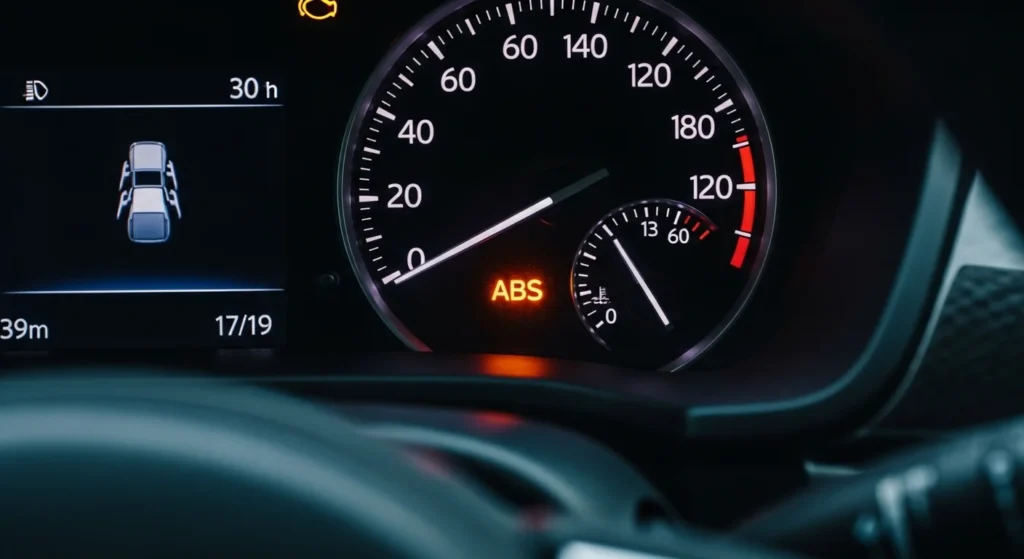
ABS meaning on a car might seem like just another dashboard light, but understanding it could literally save your life. This essential safety feature, known as the Anti-lock Braking System, keeps your wheels from locking up during sudden stops, giving you control when you need it most. If you’ve ever wondered why that little ABS light flashes or stays on, you’re in the right place!
In this guide, we’ll explore everything about ABS: how it works, common issues, maintenance tips, and safety benefits. By the end, you’ll know exactly how ABS protects you in emergencies and how to keep it functioning perfectly. Buckle up, because we’re diving into the ultimate ABS breakdown every driver should know!
✅ Quick Checklist Before Understanding ABS
Before we dig deep, here’s a quick checklist to help you understand ABS better:
Know the acronym: ABS stands for Anti-lock Braking System.
Check your dashboard: ABS lights indicate system status or issues.
Understand your brakes: ABS improves control during sudden stops.
Regular maintenance: Ensure brake fluid and sensors are in top shape.
Don’t panic: ABS is designed to prevent skidding, not replace careful driving.
🏎️ What ABS Means on a Car
ABS, or Anti-lock Braking System, is a safety feature designed to prevent your wheels from locking during hard braking. When you slam on the brakes, ABS automatically pulses the brakes multiple times per second. This action allows your tires to maintain traction and steerability, reducing the risk of skidding, especially on wet or icy roads.
Essentially, ABS keeps you in control. Even in emergency situations, it helps your car stop faster while maintaining the ability to steer. Modern vehicles often combine ABS with other safety systems like Electronic Stability Control (ESC) for maximum protection.
Quick takeaway: If the ABS light comes on while driving, it could signal a malfunction. While your brakes will still work, ABS functionality might be compromised, so it’s important to get it checked promptly.
⚡ How ABS Works
ABS uses a combination of sensors, valves, and a pump to monitor wheel speed and control braking pressure. Here’s a simplified step-by-step explanation:
Wheel Speed Sensors detect if a wheel is about to lock.
ABS Control Module calculates the ideal braking force.
Hydraulic Valves adjust the brake pressure for each wheel.
Pump restores pressure to maintain optimal braking.
You feel a pulsating pedal, which is normal and indicates ABS is active.
By allowing wheels to keep rolling slightly, ABS prevents skidding and increases stopping efficiency.
🛠️ Common ABS Issues
Even though ABS is highly reliable, problems can arise:
ABS Light Stays On: Often indicates a faulty sensor or wiring issue.
Brake Pedal Pulsates Abnormally: Could be a pump or valve problem.
Unusual Noises: Clicking or grinding may come from ABS activation.
Malfunction in Wet Conditions: Sensors may be dirty or corroded.
Tip: Regular inspections during service can prevent most ABS failures.
🚦 Benefits of ABS
ABS isn’t just a dashboard light—it’s a life-saving technology. Benefits include:
Reduced Skidding: Maintains traction during sudden stops.
Improved Steering Control: Helps maneuver around obstacles.
Shorter Stopping Distance: Especially on slippery roads.
Enhanced Confidence: Drivers feel safer in emergency situations.
🏁 ABS vs Non-ABS Cars
Here’s what sets ABS-equipped cars apart from traditional braking systems:
| Feature | ABS Car | Non-ABS Car |
|---|---|---|
| Wheel Locking | Prevented | Possible during hard stops |
| Steering Control | Maintained | Lost during skids |
| Stopping Efficiency | High on slippery roads | Reduced |
| Dashboard Alerts | ABS Light for issues | None |
🔧 How to Maintain ABS
Maintaining your ABS is straightforward:
Check Brake Fluid Regularly 💧
Inspect Brake Pads & Rotors 🛞
Clean Wheel Sensors 🧽
Schedule Regular Service 🔧
Listen for Unusual Noises 👂
A well-maintained ABS ensures your safety and prolongs the system’s lifespan.
💡 How We Explain ABS
When creating guides about car features like ABS, we follow a simple process:
Research: Gather accurate automotive information.
Simplify: Explain technical terms in everyday language.
Visualize: Use examples, analogies, and tables.
Engage: Include checklists, tips, and FAQs.
Optimize: Ensure content is SEO-friendly and readable.
🌟 Tips for Making Your Driving Safer with ABS
Practice in a Safe Area: Know how ABS feels during emergency stops.
Maintain Tires: Proper grip improves ABS effectiveness.
Avoid Panic Braking: ABS works best when brakes are fully applied.
Stay Informed: Understand all dashboard lights and car systems.
❓ FAQs About ABS Meaning on a Car
1. What does ABS light mean on a car dashboard?
The ABS light indicates that the system is either active or malfunctioning. If it stays on, the system may need inspection.
2. Does ABS help on icy roads?
Yes! ABS prevents wheel lockup and allows you to maintain control, which is crucial on slippery surfaces.
3. Can I drive with ABS light on?
You can drive, but ABS may not function. Normal brakes still work, but emergency braking may be less safe.
4. How long does ABS last?
With proper maintenance, ABS can last the life of your car. Issues usually arise from sensors or hydraulic components.
5. Is ABS expensive to repair?
Repair costs vary. Sensor replacement is usually $50–$200, while more complex hydraulic issues can cost more.
6. Does every car have ABS?
Most modern cars are equipped with ABS, but some older or economy models may not have it.
🏁 Conclusion
Understanding ABS meaning on a car isn’t just about knowing an acronym—it’s about improving safety and control every time you drive. From reducing skidding to maintaining steering control during emergencies, ABS is a crucial component of modern vehicles. By maintaining your brakes, monitoring the ABS system, and understanding its benefits, you can drive confidently and safely.
Have you checked your ABS recently? Share your experience or favorite tip in the comments below! 🚗💨